25 Digital Products You Can Create With ChatGPT and Sell Online
If you have ever opened ChatGPT thinking, I know I want to create something digital, but I have absolutely no idea what, you are very much not alone.
A lot of advice about making digital products with AI makes it sound ridiculously simple.
Ask ChatGPT to write an ebook.
Put it in Canva.
Upload it somewhere.
Done.
But there are so many more interesting things you can create with AI than another generic ebook.
You can use ChatGPT to help you turn an idea into a planner, calculator, workbook, template pack, database, checklist, dashboard, swipe file, decision tool and plenty more.
The important bit is this:
The value of your digital product is not that ChatGPT helped you make it. The value is that it helps a specific person solve a real problem.
In this post, I have put together 25 digital product ideas you could use ChatGPT to help create, including examples of how each one could become more specific and useful.
Before You Create Anything With ChatGPT
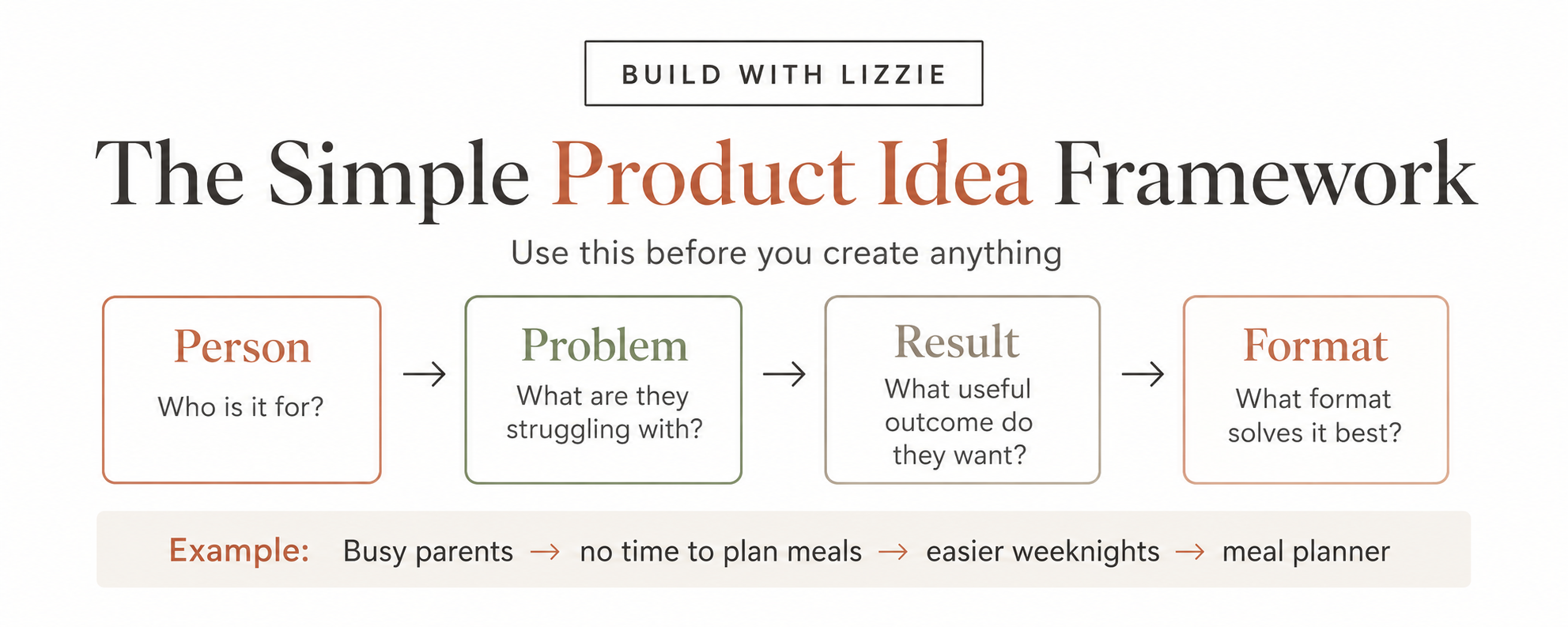
Before we get into the ideas, there is one little framework I keep coming back to when thinking about digital products:
Person + Problem + Useful Result + Format
This makes such a difference.
For example:
Very broad idea:
Meal planner
More specific idea:
15-Minute Weeknight Meal Planner for Busy Parents
The second version immediately gives you more direction.
You know who you are creating it for. You know what problem you are trying to solve. You know the kind of result the buyer wants.
ChatGPT can then help you with the actual creation process.
It might help you:
- brainstorm sections
- organise information
- generate examples
- create first drafts
- structure a workbook
- suggest formulas
- create questions
- simplify instructions
- generate variations
- spot gaps in your idea
But you still need to decide what is worth creating in the first place.
If choosing an idea is the part you are currently stuck on, I have also written a guide on what digital product you should sell.
For now, though, let’s look at what you could actually make.
Planners, Trackers and Organisation Products
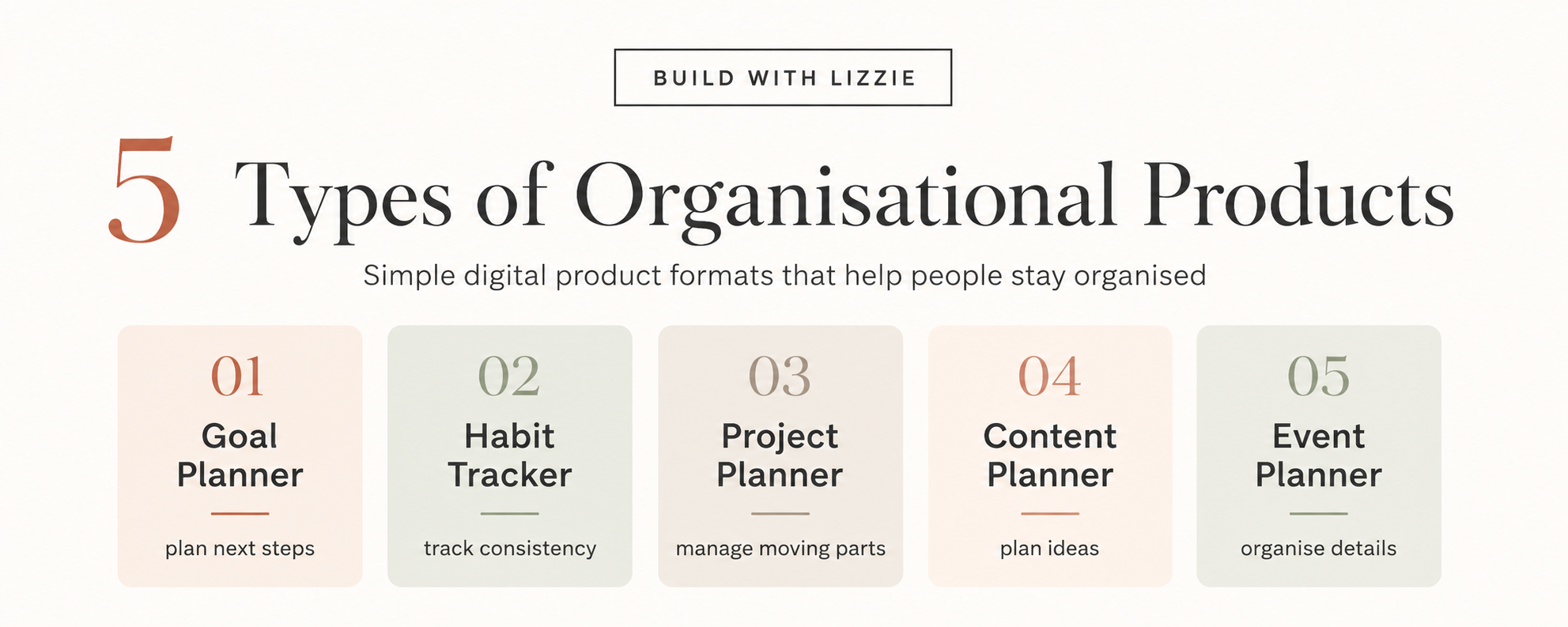
1. A Goal Planner
A goal planner can work in almost any niche, but the more specific you make it, the more useful it can become.
Instead of creating a generic goal-setting planner, you could make something like:
- a 90-Day Career Change Planner
- a First 10K Running Goal Planner
- a New Etsy Shop Launch Planner
- a Six-Month Home Decluttering Planner
- a First Vegetable Garden Planner
ChatGPT could help you develop milestones, reflection questions, weekly planning prompts and check-in pages.
The part I would add myself is the actual system.
You do not want to throw 100 AI-generated prompts onto a page just because you can. Think about what someone genuinely needs to do first, second and third.
2. A Habit Tracker
Habit trackers are simple, which is actually part of their appeal.
You could make one around a very specific result, such as:
Morning Routine Tracker for Freelancers Working From Home
ChatGPT could help you brainstorm habit categories, weekly reflection questions and ideas for measuring progress.
You could create it in Canva, Google Sheets, Excel or even Notion depending on the audience.
3. A Project Planner
Think of something your customer is trying to complete that has lots of moving parts.
For example:
Home Renovation Project Planner
It could include:
- project stages
- contractor questions
- materials lists
- budget sections
- deadlines
- decisions still to make
- room-by-room planning
ChatGPT is especially useful here because you can ask it to help you break one big project into smaller stages.
4. A Content Planner
There are already thousands of general content planners.
That does not mean you cannot create one. It means you probably need to make yours much more specific.
For example:
30-Day Instagram Content Planner for Dog Groomers
ChatGPT could help you create:
- content pillars
- post angles
- seasonal ideas
- educational topics
- promotional prompts
- customer FAQ ideas
That immediately feels more useful than “365 social media prompts for everyone.”
5. An Event Planner
Events create lots of little decisions, which makes them perfect for digital products.
You could create:
Kids' Birthday Party Planning Workbook
with sections for:
- guest list
- budget
- food
- entertainment
- decorations
- supplies
- party timeline
- things to buy
- things to prepare
ChatGPT can help you build the structure and think through what somebody might forget.
Templates and Done-for-You Frameworks
6. An Email Template Pack
One of the easiest ways to make a template pack more useful is to focus on a very particular customer and situation.
Instead of:
50 Email Templates
try:
Client Follow-Up Email Templates for Freelance Designers
You could include templates for situations like:
- following up after an enquiry
- chasing missing content
- sending a project update
- asking for feedback
- checking in after a proposal
- closing a project
ChatGPT can help you draft different versions and tones.
I would still rewrite them yourself so they sound natural rather than like obvious AI copy.
7. Social Media Caption Templates
Again, specificity helps.
For example:
Instagram Caption Starter Pack for Wedding Photographers
You could organise the templates into sections such as:
- behind the scenes
- client testimonials
- booking availability
- educational content
- portfolio posts
- FAQs
- seasonal promotions
The product becomes much easier to understand when someone can immediately picture how they would use it.
8. A Client Questionnaire
If you have experience working with clients, this is a great area to look for product ideas.
For example:
Website Design Client Discovery Questionnaire
ChatGPT could help you brainstorm the questions that might need to be asked about:
- goals
- audience
- visual preferences
- required pages
- functionality
- deadlines
- competitors
- existing assets
Then you can organise the questions into a smoother client experience.
9. A Proposal Template
Freelancers and small business owners often need repeatable systems.
A proposal template could help with exactly that.
For example:
Freelance Social Media Management Proposal Kit
It could include sections for:
- goals
- scope
- deliverables
- timeline
- package options
- process
- next steps
ChatGPT can help you structure and draft the general language, although anything contractual or legal should be checked properly rather than relying on AI.
10. An SOP Template Pack
SOP stands for standard operating procedure.
Basically, it is a documented process for doing something consistently.
You could create:
Simple SOP Templates for Virtual Assistants
ChatGPT can help turn a messy process into:
- Purpose
- Tools needed
- Steps
- Quality checks
- Common problems
- What to do if something goes wrong
This type of product can be simple to create but very useful to the right person.
Spreadsheets, Calculators and Interactive Tools
This is where things can get really interesting.
A digital product does not have to be something people sit and read.
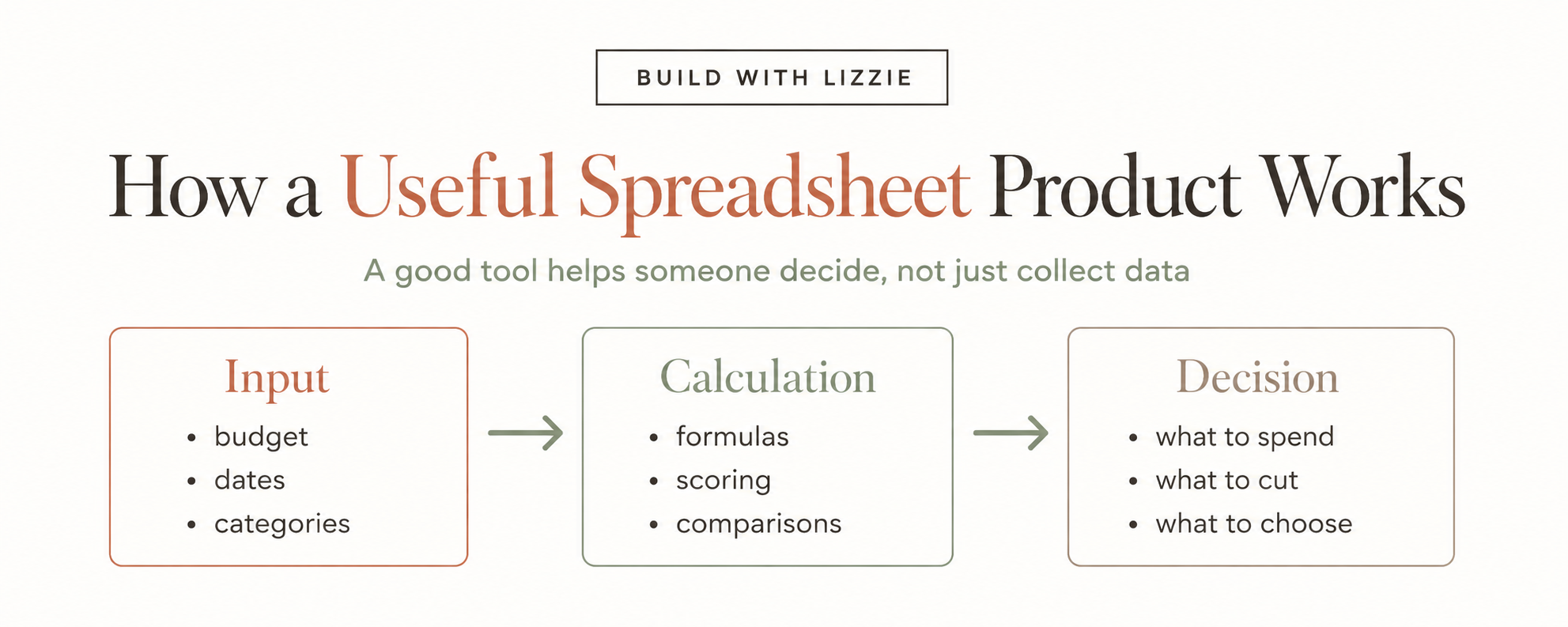
Sometimes the most useful products help someone calculate, compare, decide, organise or track.
11. A Budget Calculator
You could create a budget calculator for almost any expensive project or life event.
For example:
Wedding Budget Calculator
Instead of simply listing costs, the spreadsheet could help someone see:
- their total budget
- planned spending
- actual spending
- money still available
- category overspending
- payment deadlines
ChatGPT can help you decide what categories to include, suggest formulas and explain how different parts of the spreadsheet could work.
You still need to test every formula yourself.
I have played with this idea quite a lot. One example was taking a general wedding budget spreadsheet and reframing it around a specific £10,000 cap. Instead of only tracking spending, the new version included things like headroom, a health score and a stress test to show what would happen if costs increased. The point was not simply changing the colours. The whole product became more specific to the buyer and the decision they were trying to make.
12. A Pricing Calculator
This could work well for freelancers and service providers.
For example:
Freelance Photography Pricing Calculator
The user might enter:
- hours spent shooting
- editing time
- travel
- equipment costs
- business expenses
- desired hourly rate
- profit margin
The spreadsheet could then help them calculate a price.
ChatGPT is useful for helping you think through the logic, but again, test the calculations manually.
13. A Comparison Calculator
Some of the best digital products help people make a decision.
For example:
Wedding Venue Package Comparison Calculator
Instead of comparing the headline price alone, your buyer could compare:
- venue hire
- food
- drinks
- furniture
- staffing
- accommodation
- additional charges
- cost per guest
This idea came up in my own wedding-planner reframe work because the “cheapest” venue can change once you include what is missing from each package.
That is exactly the kind of problem a digital tool can solve really well.
14. A Progress Dashboard
Dashboards give people a quick visual answer to the question:
How am I doing?
You could create:
Debt Payoff Progress Dashboard
It might show:
- starting balance
- current balance
- percentage paid
- target date
- monthly payment
- milestone progress
ChatGPT can help you decide what numbers actually matter and suggest spreadsheet formulas or charts.
15. A Scoring Tool
I really like scoring tools because they can turn something vague into something easier to think about.
For example:
Is This Business Idea Worth Pursuing? Scorecard
Someone could score their idea against things like:
- how clear the customer is
- how strong the problem is
- how easy the audience is to reach
- whether people already pay for solutions
- how realistic the product is to create
Then they get an overall score.
It does not have to make the decision for them. It simply helps them think more clearly.
Workbooks, Guides and Educational Products
16. A Practical Workbook
A workbook is different from an ebook because the reader should actually do something with it.
For example:
First-Time Manager 1:1 Meeting Workbook
You could include:
- meeting preparation
- question prompts
- agenda planning
- notes
- action points
- follow-up
- reflection
ChatGPT could help you brainstorm sections and questions, but the usefulness comes from how you put the whole process together.
17. A Mini Guide
Guides still absolutely have a place.
The trick is to make them solve a focused problem rather than trying to cover everything.
For example:
Beginner's Guide to Starting a Balcony Herb Garden
ChatGPT could help you:
- outline the guide
- generate FAQs
- simplify explanations
- build checklists
- create quick-reference sections
If your guide contains factual information, check it rather than assuming AI has got everything right.
18. A Checklist Pack
Checklists are one of those products that can look almost too simple.
But simplicity can be brilliant when someone just wants to know what to do.
For example:
Airbnb Turnover Checklist Pack
You might organise it into:
- kitchen
- bathroom
- bedrooms
- linen
- safety
- inventory
- final inspection
ChatGPT can help you brainstorm what belongs in each section.
Then your job is to remove the fluff and make it genuinely practical.
19. A Question Bank
Question-based products can work in all kinds of niches.
For example:
100 Family Conversation Questions for Road Trips
You could also create:
- interview question banks
- coaching questions
- journal questions
- classroom questions
- book-club discussion questions
- date-night conversation prompts
The value is not necessarily having the biggest number of questions.
It is having the right questions, organised in a useful way.
20. A Study Resource
If you understand a particular subject well, AI can help you create educational resources.
For example:
GCSE Biology Retrieval Question Pack
ChatGPT could help you generate:
- quizzes
- recall questions
- worked examples
- topic summaries
- practice activities
But education is one area where I would be especially careful about checking accuracy and making sure the content matches the curriculum or specification you are targeting.
Resource Libraries and Decision Tools
21. A Swipe File
A swipe file is basically a curated collection of examples or starting points.
For example:
Call-to-Action Swipe File for Etsy Sellers
Instead of throwing 200 random CTAs onto one page, organise them by purpose:
- buy
- save
- click
- join
- download
- compare
- learn more
That organisation is part of the value.
22. A Resource Database
Databases can be extremely useful when somebody would otherwise spend hours doing their own research.
For example:
Cheap Family Days Out Database
You could make it searchable by:
- location
- age range
- indoor/outdoor
- price
- season
- activity type
You might build it in Google Sheets, Airtable or Notion.
ChatGPT can help you decide what categories and filters would make the database easier to use, but you would still need to research and check the actual information.
23. An Audit Tool
An audit helps somebody examine where they are now and find gaps.
For example:
Small Business Website Audit Workbook
Sections might include:
- homepage
- navigation
- mobile usability
- calls to action
- contact information
- trust signals
- offers
- customer journey
You could add a simple score so users can identify which areas need attention first.
24. A Decision-Making Workbook
Some problems do not have one correct answer.
That does not mean you cannot create a product to help.
For example:
Should I Stay in My Job or Leave? Decision Workbook
It could help somebody think through:
- what is currently wrong
- what is still working
- money
- alternatives
- values
- risk
- practical next steps
The product is not there to tell them what to do.
It helps them organise a messy decision.
25. A Prompt-Assisted Tool
This is probably one of the more interesting ways to combine AI with a digital product.
Instead of selling a giant list of prompts, build a product that helps the buyer give AI the right information first.
For example:
Weekly Meal Planning Generator
The customer fills in:
- number of people
- budget
- dietary requirements
- foods they dislike
- cooking time
- ingredients they already have
Your product then gives them a structured ChatGPT prompt that uses those answers to create a personalised weekly plan.
The value is not just the prompt.
It is the whole process around the prompt.
Which Digital Products Are Easiest for Beginners?
If you are looking through this list thinking, some of these sound far too complicated, start small.
You absolutely do not need to begin with an advanced spreadsheet full of dashboards and formulas.
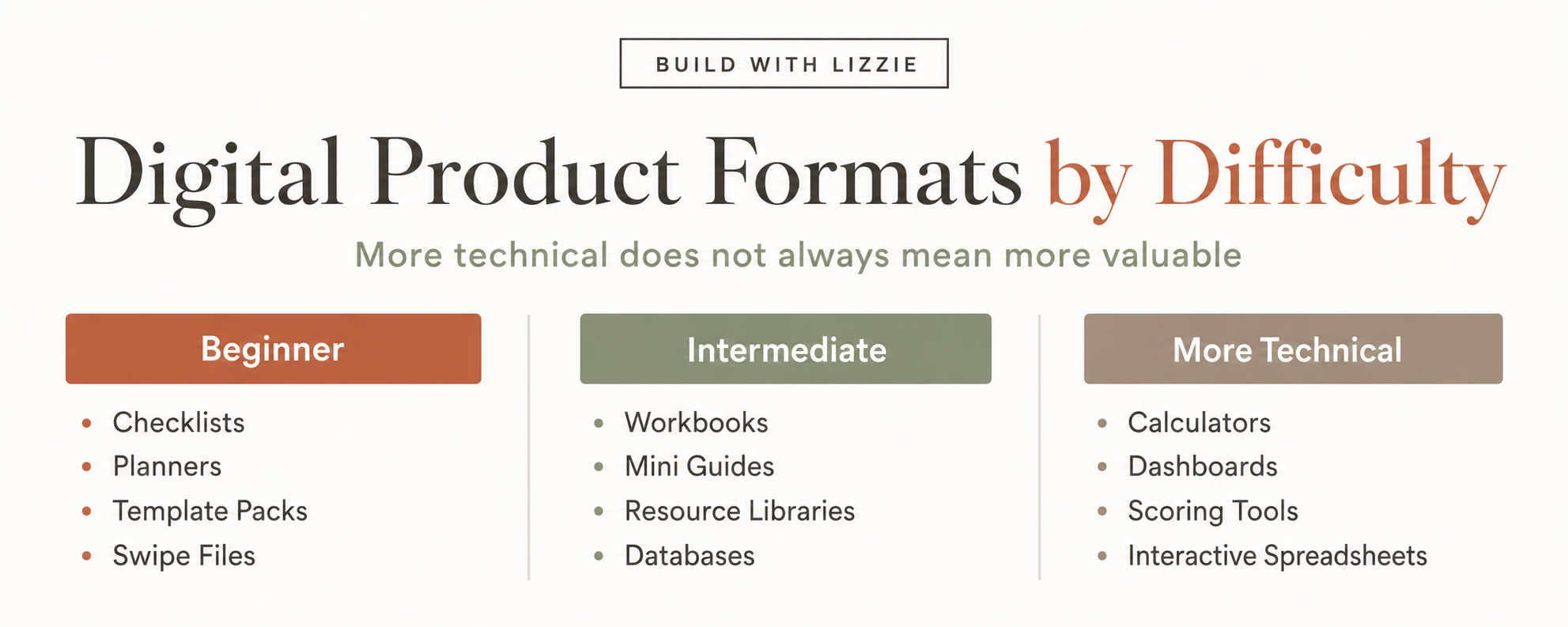
Some of the simplest formats to start with are:
- checklists
- planners
- template packs
- worksheets
- swipe files
- question banks
Slightly more involved products might include:
- workbooks
- resource databases
- SOP packs
- mini guides
- Notion systems
More technical products might include:
- calculators
- dashboards
- scoring systems
- interactive spreadsheets
- AI-assisted workflows
And one thing I would really keep in mind:
More complicated does not automatically mean more valuable.
A two-page checklist that saves somebody an hour every week may be much more useful than a 70-page guide they never finish reading.
What ChatGPT Is Actually Good at When Creating Digital Products
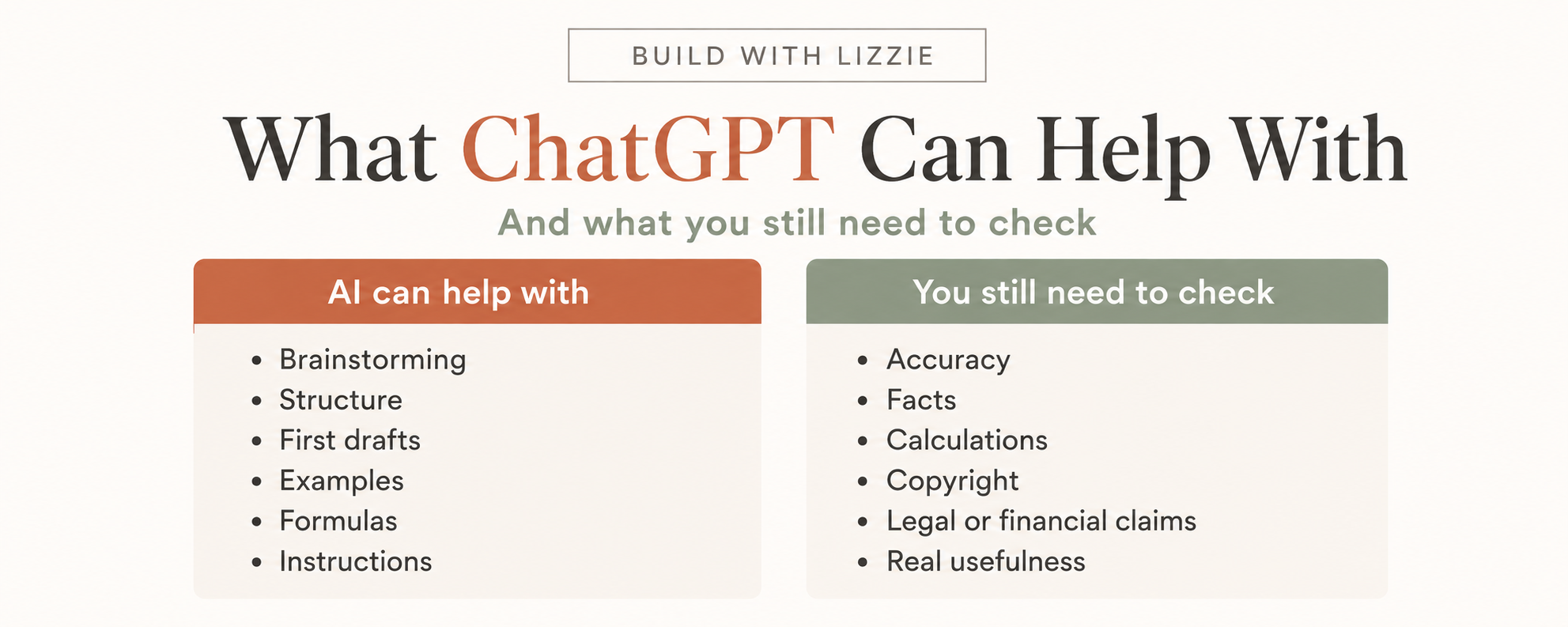
ChatGPT can save you a huge amount of time.
I find it especially useful for getting past that horrible blank-page stage.
You can use it to help:
- brainstorm product angles
- organise ideas
- create an outline
- develop categories
- write first drafts
- generate examples
- create question banks
- simplify instructions
- suggest spreadsheet formulas
- identify missing sections
- create variations
- help you rethink a generic idea for a more specific audience
You can even upload an existing spreadsheet you are allowed to edit and ask ChatGPT to analyse what is useful, what feels generic and what could be changed.
That is a big part of how I have been experimenting with turning broad spreadsheet ideas into more specific products. In one of my own examples, the useful part of the original workbook stayed, but the audience, promise, assumptions, language and decision tools changed around it.
What I Would Not Leave Completely to ChatGPT
AI is useful.
It is not a substitute for checking your work.
Be particularly careful with:
- legal wording
- medical information
- financial claims
- statistics
- formulas
- calculations
- educational information
- current information
- copyrighted material
And if you are building a spreadsheet, calculator or scoring tool, actually test it.
Enter strange numbers.
Leave boxes blank.
Try the wrong inputs.
See what breaks.
One of the most important things in my own spreadsheet workflow is making sure a product still works properly after the AI-assisted creation part is finished. That includes checking formulas, outputs, labels, instructions and blank states before anything is published.
How Do You Choose Just One Idea?
This is the bit that can become dangerous.
You start with no ideas.
Then suddenly you have 25.
Then you ask ChatGPT for another 100.
Then you have 17 browser tabs open and somehow you are designing three businesses at once.
I have absolutely found that generating ideas is much easier than choosing one.
So instead of asking:
Which idea sounds the most exciting?
I would ask:
1. Who is this actually for?
Can you describe the person clearly?
2. What problem does it solve?
Would they recognise the problem themselves?
3. What useful result does it give them?
Does it help them save time, decide, organise, calculate, learn, plan or make progress?
4. Can you realistically create it?
Your first product does not need to become a six-month project.
5. Could you actually reach the people who need it?
Think about Pinterest searches, Google searches, communities, social content and other places they might already be looking for help.
6. Can you find evidence that people care about the problem?
Before spending weeks building something, look for clues.
Are people searching for it?
Asking questions about it?
Buying related products?
Complaining about the problem?
Talking about it?
I would rather find one clear little problem than choose an impressive-sounding product with no obvious buyer.
Frequently Asked Questions
Can I use ChatGPT to create digital products?
Yes. ChatGPT can help with brainstorming, research support, outlining, drafting, organising information, developing examples and even technical tasks such as suggesting spreadsheet formulas.
You are still responsible for checking the finished product and making sure you have the right to use anything included in it.
What digital products can I make with ChatGPT?
You can use ChatGPT to help create things such as planners, templates, trackers, spreadsheets, calculators, guides, workbooks, swipe files, databases, question banks, dashboards and prompt-assisted tools.
The format matters less than the problem it solves.
What is the easiest digital product to create?
For most beginners, a focused checklist, template, worksheet, planner or small workbook will usually be easier to create than a complicated calculator or interactive dashboard.
That does not mean the simple product is less valuable.
Do I need to be an expert to create a digital product?
Not always.
There are plenty of useful products built around organisation, experience, curation and practical systems rather than formal expertise.
But you do need enough understanding to judge whether your finished product is useful and accurate.
If you are working in an area where bad information could cause harm, expertise and proper verification become much more important.
Can ChatGPT create spreadsheets?
ChatGPT can help plan spreadsheet structure, suggest formulas, develop categories, create instructions and think through features.
You should still test formulas, dropdowns, calculations and outputs yourself before giving or selling the spreadsheet to anyone.
Can I sell something that ChatGPT helped me create?
AI can be part of your creation process, but make sure you understand the rules of the platforms and tools you use, verify your content, respect intellectual property rights and make the finished product genuinely useful.
The goal should never be to generate as much AI content as possible.
The goal is to create something somebody is actually glad they found.